
Jusfres OJ vs Tetra Paks and Bottled Juices

Orange juice is the desired breakfast juice in a lot of families in Canada and globally. This is for good reason, due to its delicious and refreshing taste. However, there are a lot of health benefits that an individual can get from orange juice. Orange juice is popularly known as a very rich source of vitamin C. In addition to this, it packs other lesser-known vitamins and minerals, plus a lot of antioxidants and beneficial enzymes which aid in digestion. We’ll compare Jusfres OJ vs tetra paks and bottled juices.
Many families rely on commercial store-bought orange juice as their main source. Most people are unaware of the huge differences in content between freshly squeezed orange juices and store-bought orange juice that are commercially produced. Not only is the content different, but the store-bought orange juice often contains harmful substances which may affect the health of consumers. In this article, freshly squeezed orange juice will be compared with store-bought orange juice based on taste, the process of production, the content and the additives.
Taste
The Jusfres orange juice which is freshly squeezed when gotten from the vending machine tastes great. This is because the consumer is tasting it as it is squeezed, and can taste the natural sugars that are present. The taste is delicious as well as refreshing, this is without the addition of any taste-altering or taste-enhancing substance. However, in contrast to this, commercially bottled juice has an altered taste because it contains a lot of preservatives and synthetic sugars.
Production process
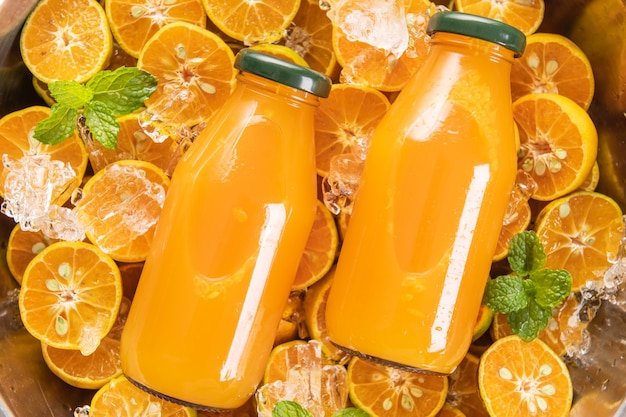
Bottled orange juices usually have a claim that the juice is 100% orange juice, this is not usually the full truth as they contain chemical substances that are in a way similar to what is added to perfumes. This is done to keep the flavour of the juice consistent between different batches. In the production process of these bottled juices, the juices after being squeezed out are stored in huge vats for up to a year. In these vats, oxygen is removed in order to prevent the juices from spoiling. The juices also undergo pasteurization to kill the germs and make them suitable for public use. Unfortunately, this scorching process kills the enzymes, alters the antioxidants and significantly reduces the vitamin C load.
The production process also destroys the natural taste of the juice. Due to all these, the manufacturers add synthetic sugars to compensate for the taste, synthetic vitamin C and preservatives to prevent the juice from spoiling. These bottled juices are also likely to be loaded with fluorides and other water-based chemicals. In contrast to this, the Jusfres orange juice is freshly squeezed, and consumed immediately. This means that it does not contain any of the added flavours, synthetic vitamins or preservative chemicals. It also contains a lot of antioxidants, minerals, and enzymes which have not been altered and instead of being harmful to the body.
It helps in eliminating a lot of the harmful substances from the consumer’s body because these substances help in detoxification and are beneficial in digestion. Also, while the pasteurization process of bottled juices is intended to make the drinks safe and forestall health concerns that can be gotten in the juice production process, Jusfres orange juice naturally possesses antimicrobial properties from the vitamin C, citric acid and its other content, which serve the purpose that pasteurization would have.
Sugar content
In the Jusfres orange juice, the sugar present is in three different forms; sucrose, fructose and glucose. However, in the end, all are converted to glucose which is the natural fuel of the body. In the absence of glucose, the body gets its energy from other sources, which includes the conversion of fats and protein into glucose. Having an adequate amount of glucose is very important to the body. When the glucose gets too low, there is usually an increase in stress hormones like cortisol and adrenaline. When these hormones are present for a while, they can be damaging to the body. Bottled orange juices contain a lot of artificial sugars which can be harmful to the individual and can cause weight gain and diabetes.
Other content
As has been previously stated, Jusfres orange juice is a major source of vitamin C, a very strong antioxidant source which is beneficial to the drinker’s white cell count. It is also one of the best sources of bioflavonoids, which are plant pigments that increase and enhance the bioavailability of nutrients like vitamin C. These bioflavonoids are so potent that when they are included in synthetic vitamin C, they significantly increase the amount of vitamin C that is absorbed into the system. When they are then combined with the rich form of vitamin C that is present in the Jusfres orange juice, they provide maximum availability and are the best source of antioxidants.
The antioxidant is also essential for collagen production, which is beneficial to the digestive system, good for strong bones and teeth, and beneficial to the skin (1), as the drinker appears younger due to the freshness of the skin. There are also many anti-stress nutrients in the Jusfres orange juice like magnesium, potassium and polyphenols, which act as a support system for the adrenals, the thyroid and the body’s stress response system. They are very essential in the production and the conversion of active thyroid hormone T3. When they are absent, the thyroid cannot keep up with the body’s hormonal demands, and the overall physiological stress is increased.
Also, when the adrenal glands are overworked due to chronic stress, and a lack of nutritional storage, they may be unable to supply the body with hormones like cortisol which are needed to maintain homeostasis in the individual’s daily life. All these cannot be gotten from bottled orange juice or the ones that are in tetra paks and sold commercially. This is because the artificial supplementation is inadequate in supplying all this critical content. Unless it is in the whole-food form, like that of the Jusfres orange juice, it cannot contain the full complement of vitamin C and other beneficial content.
Reference