
Introduction: Is drinking orange juice as good as eating the fruit?
People always ask what the better option is. Is drinking orange juice the same as eating the fruit? Many of us grew up with the thought that drinking a glass of orange juice is a quick and easy way to get our daily dose of vitamin C. But is it really as good as sinking your teeth into a juicy, fresh orange? We will talk about the nutritional differences and health implications here.
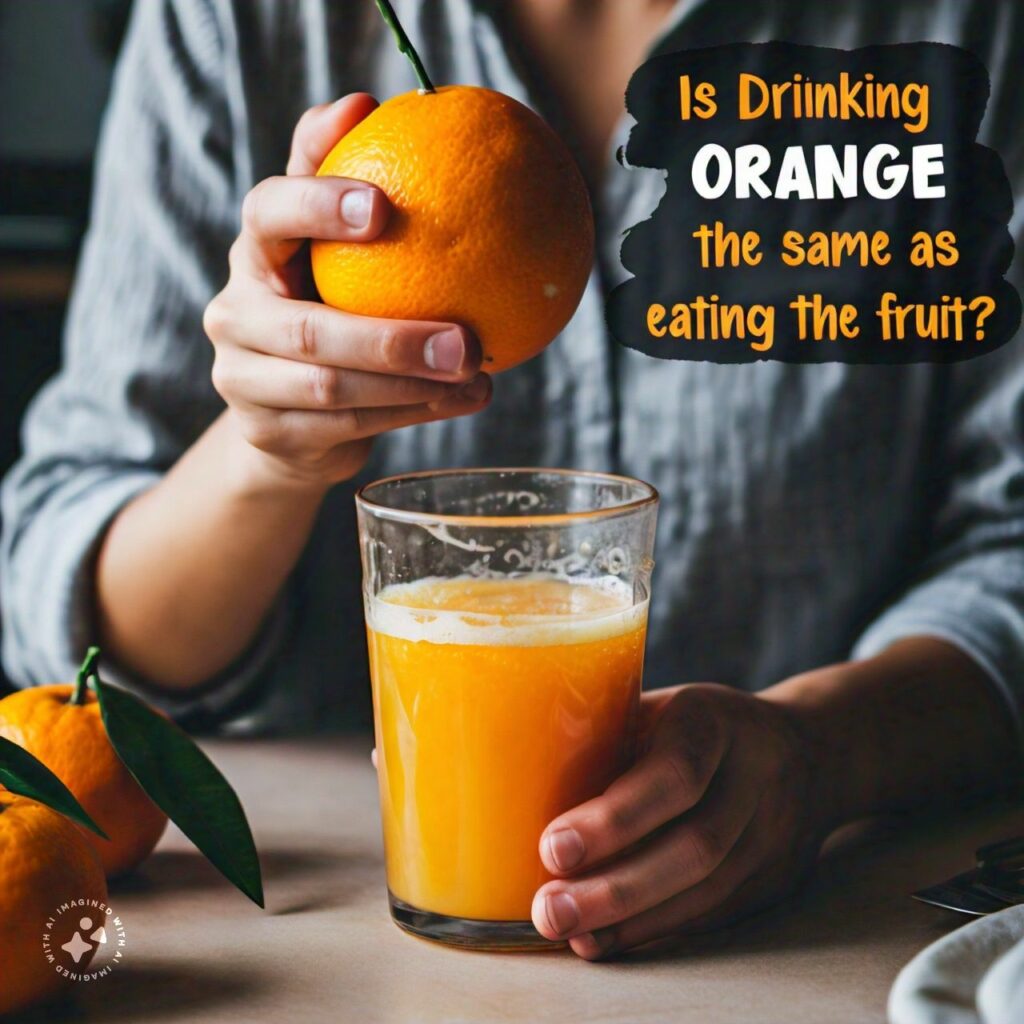
Nutritional differences between orange juice and fruit
Both whole oranges and orange juice have important vitamins and minerals. However, when oranges are turned into juice commercially, things can change. Oranges have a lot of vitamin C, but some of it might be lost when they’re juiced. Juices bought in stores tend to go through pasteurization. This process can lower the vitamin C. Freshly squeezed juice, like what Jusfres offers, usually keeps a good amount of this vitamin. Learn how How Orange Juice Boosts Your Immunity and Overall Health
Oranges have a high fibre content. It is great for controlling blood sugar, managing weight, and maintaining a healthy digestive system. The fibre content is reduced and sometimes eliminated during the juicing process. In addition to phytochemicals, oranges also contain antioxidants (1). When making orange juice, some antioxidants that are sensitive to heat might disappear. Orange juice usually has more calories than whole oranges because the fibre is removed. To get all the health benefits, it is better to combine whole fruits with Jusfres orange juice. Here are 15 Reasons Why You Should Grab an Orange Juice
Health Benefits and Fibre Content of Orange Juice and Whole Fruit
Health Benefits of Orange Juice:
- Orange juice has a lot of vitamin C. It helps your immune system, heals wounds, and keeps your skin healthy.
- Drinking orange juice can keep you hydrated, especially after you’ve been active.
- Orange juice has antioxidants that protect your cells from damage and might lower the risk of chronic diseases.
- Some studies show that drinking orange juice can help your heart by reducing inflammation, lowering blood pressure, and improving cholesterol levels.
- The vitamin C in orange juice helps your body absorb iron from plant-based foods, which is good for vegetarians and vegans.
- Convenience: Orange juice offers a convenient and quick way to consume the nutrients found in oranges, especially for people with busy lifestyles.
Fibre Content:
- Whole Oranges: Oranges are an excellent source of dietary fibre, with about 3 grams of fibre per medium-sized fruit. The fiber in oranges helps keep your digestive system healthy, controls your blood sugar, and helps manage your weight.
- Orange Juice:
- Orange juice usually has less fibre because the juicing process takes out the pulp.
- Even though juice doesn’t have much fibre, it still has important vitamins, minerals, and antioxidants.
- Orange juice has natural sugars that give you quick energy, which is great before a workout.
Glycemic index and Sugar content
The glycemic index (GI) shows how fast food raises your blood sugar. Oranges have a lower GI than orange juice because of their fibre. Therefore, eating oranges slows down the absorption of natural sugars into the blood.
Orange juice has more sugar than whole oranges because the fibre is taken out. This can make your blood sugar go up faster, especially if you have diabetes or insulin resistance. It is also good to know that the presence of natural sugars in orange juice makes it a healthy pre-workout beverage.
What are the Processing effects of orange juice vs whole fruit?

Based on the processing effects, is drinking orange juice the same as eating the fruit? Processing orange juice can cause vitamin C to degrade and fibre to be lost. This lowers the juice’s nutritional value. Nonetheless, it continues to be a concentrated source of vital nutrients such as antioxidants, potassium, and vitamin C.
Conversely, whole oranges are rich in fibre, which helps with digestion, encourages fullness, and controls blood sugar levels. Eating whole oranges preserves all of the fruit’s nutrients because the skin is still on the fruit. Fibre slows down the absorption of sugar, releasing energy gradually and preserving stable blood sugar levels.
Vitamin C retention in orange juice vs whole oranges
Vitamin C is very important for a healthy immune system and overall well-being. Both the fruit and the juice are good sources of vitamin C. The processing involved in making commercial juices can lead to a loss of this nutrient. Opting for freshly squeezed juice or choosing brands like Jusfres that use minimal processing can help retain more vitamin C.
Is it better to eat an orange or drink its juice?
Ultimately, whether it’s better to eat an orange or drink its juice depends on your individual health goals and dietary needs. Orange juice offers convenience and a quick burst of nutrients and energy. Eating whole orange fruit provides added fibre and may help you feel fuller for a longer period.
Is there a difference between eating fruit and drinking it as juice?
Yes, there is a difference. Eating whole orange fruit provides more fibre and can help regulate blood sugar levels. Meanwhile, drinking fruit juice may lead to an increase in blood sugar. It has more natural sugar content and is good as a quick energy source.
Does orange juice count as a serving of fruit?
Orange juice contains fruit-derived nutrients but it does not contain as much fibre as whole orange fruit. For optimal health benefits, it is better to eat the whole fruit and drink the juice whenever possible.
Can orange juice replace food?
No. Orange juice can serve as a nutritious addition to the overall diet. However, it should not replace whole foods. Whole fruits and foods offer more nutrients, including fibre, which is essential for overall health and well-being.
Conclusion: Is Drinking Orange Juice Same as Eating the Fruit?
Drinking orange juice can provide a quick and convenient way to consume essential nutrients like vitamin C, antioxidants, etc. It is not the same as eating the whole fruit. Whole oranges offer additional benefits. An example is fibre, which plays a crucial role in digestion and blood sugar regulation. So, next time you reach for a glass of orange juice, consider adding some fresh oranges to your diet as well for maximum health benefits.